Securing the Digital Realm: A Must-Have Cybersecurity Manual for Today’s Age
- By: dycoders
- Category: Cyber security
- Date: October 4, 2023

As we embrace the convenience and connectivity offered by the digital age, it becomes imperative to fortify our virtual fortresses against cyber threats. This professional blog serves as your go-to resource, offering insights and strategies to navigate the intricate world of cybersecurity.
In today’s interconnected world, our reliance on technology has reached unprecedented levels. From accessing a vast digital library called the Internet to transforming our homes with smart devices, technology shapes our daily lives in countless ways.
The Internet, akin to a global repository of knowledge, empowers us to learn, research, and stay informed about global events—all at our fingertips. However, amidst the marvels of technology, there lurk potential dangers, hiding behind our devices and online activities. The realm of cyber threats is real, requiring our vigilance even as we enjoy the benefits of technology. As we embrace the convenience and connectivity offered by the digital age, it becomes imperative to fortify our virtual fortresses against cyber threats. This professional blog serves as your go-to resource, offering insights and strategies to navigate the intricate world of cybersecurity.
Cybersecurity Challenges and Strategies
In the rapidly advancing landscape of the digital age, the realm of cybersecurity is marked by both promise and peril. As technology evolves, so do the challenges that threaten the security of our digital ecosystems. This exploration delves into the intricate web of cybersecurity challenges and unveils strategies to fortify defenses and safeguard valuable digital assets.
Understanding Cybersecurity Challenges
- Sophisticated Cyber Threats:
The landscape of cyber threats is continually evolving, with cybercriminals deploying increasingly sophisticated methods. From advanced phishing attacks to intricate malware incidents, staying ahead of these threats requires constant vigilance.
- Insider Threats:
Not all threats come from external sources. Insider threats, whether intentional or unintentional, pose a significant risk. Mitigating these risks involves implementing robust access controls and continuous monitoring.
- Vulnerabilities in Applications:
The rise of application-based attacks highlights the need for a proactive approach to application security. Identifying and addressing vulnerabilities in web applications is crucial for preventing data exposure and code injection.
- Cloud Security Concerns:
With the increasing reliance on cloud services, ensuring the security of data, applications, and infrastructure in cloud environments is a growing concern. Strategies must be in place to protect against unauthorized access and data breaches.
- Internet of Things (IoT) Security:
The proliferation of IoT devices introduces new entry points for cyber threats. Safeguarding interconnected devices, from smart homes to industrial sensors, requires specialized security measures to prevent unauthorized access.
Effective Strategies for Cybersecurity Resilience
- Comprehensive Risk Assessment:
Begin by conducting a thorough risk assessment to identify potential vulnerabilities and threats. This proactive approach lays the foundation for a targeted and effective cybersecurity strategy.
- User Education and Training:
Recognizing that human error is a common factor in cyber incidents, invest in comprehensive user education and training programs. Empowered users are better equipped to recognize and respond to potential threats.
- Advanced Authentication Measures:
Move beyond traditional password-based authentication. Implement advanced authentication methods, such as biometrics, to enhance access controls and protect against unauthorized access.
- Continuous Monitoring and Incident Response:
Establish a robust monitoring system for real-time threat detection. Develop a well-defined incident response plan to enable swift and coordinated actions in the event of a cybersecurity incident.
- Collaboration and Information Sharing:
Foster collaboration within the cybersecurity community. Sharing threat intelligence and best practices enhances the collective ability to respond to emerging threats effectively.
- Integration of Artificial Intelligence (AI) and Machine Learning (ML):
Leverage AI and ML technologies to augment cybersecurity capabilities. These technologies can analyze vast datasets, recognize patterns, and respond rapidly to anomalous behavior, enhancing overall threat detection and mitigation.
- Adherence to Compliance Standards:
Stay abreast of evolving regulatory requirements and industry standards. Adherence to compliance standards not only ensures legal compliance but also contributes to a robust cybersecurity posture.
Deciphering Cybersecurity: A Holistic Approach
In the rapidly advancing landscape of the digital age, the realm of cybersecurity is marked by both promise and peril. As technology evolves, so do the challenges that threaten the security of our digital ecosystems. This exploration delves into the intricate web of cybersecurity challenges and unveils strategies to fortify defenses and safeguard valuable digital assets.
Holistic Cybersecurity Principles
- End-to-End Protection:
Cybersecurity goes beyond safeguarding individual components; it involves end-to-end protection of data, devices, software, networks, and systems. A holistic approach ensures that every aspect of the digital ecosystem is fortified against potential threats.
- User-Centric Security:
Recognizing the human factor in cybersecurity is crucial. Holistic cybersecurity acknowledges that users are both assets and potential vulnerabilities. User education, awareness, and empowerment form integral components of a comprehensive security strategy.
- Cultural Integration:
Cybersecurity is not merely a set of technical measures; it is a culture. A holistic approach involves integrating cybersecurity into the organizational culture, fostering a collective responsibility for security at all levels of the workforce.
- Proactive Risk Management:
Holistic cybersecurity is proactive in its approach to risk management. It involves continuous risk assessments, identification of potential vulnerabilities, and the development of strategies to mitigate risks before they escalate.
- Adaptive Security Frameworks:
Recognizing the dynamic nature of cyber threats, a holistic approach embraces adaptive security frameworks. These frameworks evolve in response to emerging threats, ensuring that security measures remain effective in the face of changing landscapes.
User-Friendly Tips and Tools
In the pursuit of a holistic cybersecurity strategy, user-friendly tips and tools play a pivotal role. The following insights aim to make cybersecurity accessible to everyone:
- Password Hygiene:
Simple yet effective, maintaining strong and unique passwords is the first line of defense. Encourage the use of password management tools to enhance security without sacrificing user convenience.
- Software Updates and Patching:
Keeping software and systems updated is akin to fortifying the walls of a digital fortress. Regular updates and patching address vulnerabilities, ensuring a resilient defense against potential exploits.
- Secure Communication Practices:
Holistic cybersecurity extends to communication channels. Encourage the use of encrypted communication tools to protect sensitive information from interception or unauthorized access.
- Vigilance Against Phishing:
Phishing remains a prevalent threat. Educate users about recognizing phishing attempts, and implement email filtering tools to reduce the risk of falling victim to deceptive tactics.
- Multi-Factor Authentication (MFA):
Elevate authentication practices with the adoption of multi-factor authentication. By requiring multiple forms of verification, MFA adds an extra layer of security to user accounts.
Importance of Cybersecurity
In the contemporary digital landscape, where technology intertwines with every facet of our lives, the importance of cybersecurity stands as a sentinel against the rising tide of cyber threats. This exploration delves into the fundamental significance of cybersecurity, examining why it is not just a technological imperative but a cornerstone for the stability, trust, and resilience of individuals, businesses, and nations.
- The Increasing Complexity of Business Ecosystems:
In the intricate tapestry of modern business ecosystems, the reliance on technology has reached unprecedented levels. Organizations, both large and small, leverage an expanding network of individuals, devices, and software applications. This complexity amplifies the potential attack surface for cyber threats, necessitating a robust cybersecurity framework.
- Financial and Reputational Implications:
The stakes are high in the digital age. Cyberattacks have far-reaching consequences, with financial implications topping the list. The fallout from a successful cyberattack can result in substantial financial losses, ranging from immediate operational disruptions to long-term reputational damage. The cost of recovering from a cyber incident far exceeds the investment in preventative cybersecurity measures.
- Evolving Cyber Threat Landscape:
As technology advances, so do the tactics employed by cybercriminals. The cyber threat landscape is dynamic, characterized by the continuous emergence of sophisticated attack vectors such as ransomware, phishing, and zero-day exploits. The ability to adapt and fortify defenses against these evolving threats is a testament to the importance of a proactive cybersecurity stance.
- Compliance and Regulatory Requirements:
In an era where data privacy and protection have become paramount, adherence to cybersecurity standards and regulatory requirements is not just a best practice; it’s a legal obligation. Non-compliance not only exposes organizations to legal repercussions but also erodes the trust placed in them by clients, customers, and stakeholders.
- The Amplifying Role of Cyber security in Business Operations:
For businesses, cyber security is not merely a protective shield; it is an enabler of business continuity and growth. A cyber-secure environment ensures that operations remain uninterrupted even in the face of potential threats. It fosters a climate where trust can thrive, facilitating smooth interactions with clients and partners.
- The Magnitude of Cyber security Market Growth:
The global cyber security market’s exponential growth is indicative of its increasing importance. According to reports, the market is projected to reach substantial figures, underscoring the recognition of cyber security as an indispensable investment for individuals and organizations alike.
- Small and Medium Enterprises (SMEs): A Targeted Focus:
While large enterprises may have the resources to invest heavily in cyber security, small and medium-sized enterprises (SMEs) often face unique challenges. Cybersecurity becomes a vital ally for SMEs, protecting them against potential threats that could otherwise pose existential risks.
- A Proactive Stance for a Secure Future:
In conclusion, the importance of cyber security extends far beyond the realm of IT departments. It is a strategic imperative that requires a proactive and integrated approach. By recognizing cybersecurity as an integral component of business resilience, organizations can navigate the digital landscape with confidence, safeguarding not only their assets and operations but also the trust placed in them by an interconnected global community.
Benefits of Cybersecurity
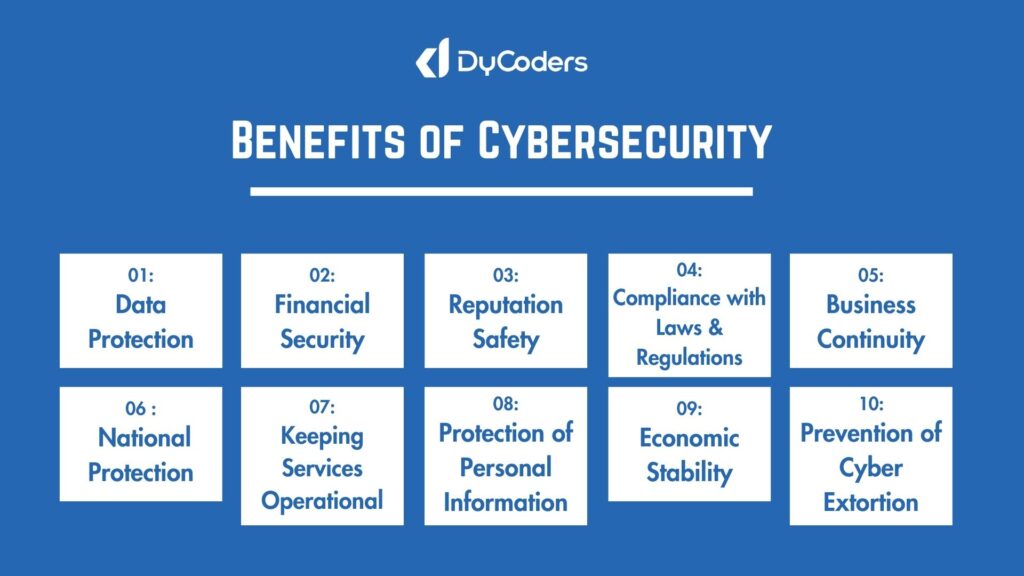
In an era dominated by digital innovation and connectivity, the benefits of cybersecurity extend far beyond the realm of protecting data and systems. This exploration delves into the multifaceted advantages that cybersecurity bestows upon individuals, businesses, and society as a whole.
- Data Protection:
At the core of cybersecurity lies the safeguarding of sensitive information. Robust cybersecurity measures ensure that personal and business data is protected from unauthorized access, theft, or tampering. This not only preserves privacy but also safeguards critical information from falling into the wrong hands.
- Financial Security:
Cyberattacks can have severe financial implications. By securing digital assets and preventing unauthorized access to financial information, cybersecurity acts as a shield against financial losses resulting from fraud, theft, or business disruption.
- Reputation Safety:
Trust is a precious commodity in the digital age. A cybersecurity breach can tarnish the reputation of individuals and businesses alike. By preventing data breaches and ensuring the integrity of digital interactions, cybersecurity safeguards the trust placed in organizations and individuals.
- Compliance with Laws and Regulations:
In an environment where data protection regulations are becoming increasingly stringent, cybersecurity ensures compliance with laws and regulations. This not only avoids legal consequences but also demonstrates a commitment to ethical and responsible digital practices.
- Business Continuity:
Cybersecurity is a linchpin for business continuity. By preventing and mitigating cyber threats, organisations can ensure the uninterrupted operation of critical systems and services. This resilience is crucial for maintaining trust and confidence in the business ecosystem.
- National Protection:
At a broader level, cybersecurity contributes to national security. Critical infrastructure, government systems, and sensitive information are all potential targets for cyber threats. A strong cybersecurity posture is essential for protecting the nation’s vital systems and ensuring stability.
- Keeping Services Operational:
For businesses and individuals alike, cybersecurity ensures that online services remain operational. Whether it’s e-commerce platforms, financial services, or communication tools, the continuity of these services is vital for daily life and business operations.
- Protection of Personal Information:
Cybersecurity stops malicious actors from gaining unauthorized access to personal information. This includes details such as names, addresses, and financial data. Protecting this information is not just about individual privacy but also prevents identity theft and financial fraud.
- Economic Stability:
Cybersecurity contributes to economic stability by safeguarding businesses and financial institutions from cyber threats. A secure digital environment fosters a robust economy, encouraging innovation, investment, and growth.
- Prevention of Cyber Extortion:
Cybersecurity measures, such as robust backup systems and ransomware prevention, act as a bulwark against cyber extortion. This ensures that individuals and businesses are not held hostage by malicious actors seeking financial gain through ransom demands.
Types of Cyber Attacks
In the ever-evolving landscape of the digital realm, cyber attackers employ a diverse array of tactics to compromise systems, steal sensitive information, and disrupt operations. This exploration delves into some of the most prevalent types of cyber attacks, shedding light on the methods and motives that drive these malicious activities.
-
Phishing Attacks:
Description: Deceptive emails or messages that trick individuals into revealing sensitive information.
Characteristics: Often disguised as legitimate communication from trusted sources.
Goals: Stealing login credentials, financial information, or personal data.
-
Malware Attacks:
Description: Malicious software, including viruses, Trojans, and spyware, that infects devices and systems.
Transmission: Spread through email attachments, infected downloads, or compromised websites.
Objectives: Stealing data, disrupting operations, or gaining control over systems.
-
Ransomware Incidents:
Description: Malware that encrypts files or systems, demanding a ransom for decryption.
Delivery: Often delivered through malicious email attachments or vulnerabilities in software.
Impact: Prevents access to critical data or systems until the ransom is paid.
-
Denial-of-Service (DoS) Attacks:
Description: Overwhelm a target’s network or website with traffic, making it inaccessible.
Variation: Distributed Denial-of-Service (DDoS) attacks use multiple compromised devices.
Purpose: Often used to disrupt online services or websites.
-
Insider Threats:
Description: Threats originating from within an organization, such as employees or contractors.
Nature: Can be accidental (e.g., data breaches due to negligence) or intentional (e.g., data theft).
Mitigation: Requires robust access controls and monitoring to prevent and detect incidents.
-
Man-in-the-Middle (MitM) Attacks:
Description: Attackers intercept and potentially alter communication between two parties.
Methods: Common techniques include eavesdropping on Wi-Fi networks or tampering with data in transit.
Objectives: Stealing sensitive information or injecting malicious content into communications.
-
SQL Injection Attacks:
Description: Exploiting vulnerabilities in a website’s database to execute unauthorized SQL queries.
Targets: Websites with poorly sanitized user inputs or inadequate security measures.
Impact: Allows attackers to retrieve, modify, or delete database information.
-
Zero-Day Exploits:
Description: Attacks targeting vulnerabilities in software or hardware that are not yet known to the vendor.
Timing: Exploited before the vendor releases a fix or patch.
Risk: Particularly potent as there is no defense in place until the vulnerability is discovered.
-
Social Engineering Attacks:
Description: Manipulating individuals to divulge confidential information through psychological manipulation.
Methods: Impersonation, pretexting, or exploiting human psychology to gain trust.
Targets: Employees or individuals with access to sensitive information.
-
Cross-Site Scripting (XSS) Attacks:
Description: Injecting malicious scripts into websites viewed by others.
Targets: Websites with vulnerabilities that allow user inputs to be executed without proper validation.
Objectives: Stealing session cookies, redirecting users, or defacing websites.
Business Growth with Cybersecurity Services
In the contemporary digital landscape, where technological advancements drive business operations, the integration of robust cybersecurity services is not just a protective measure; it’s a strategic imperative for fostering sustained growth. This exploration delves into the ways in which cybersecurity services act as catalysts for business expansion, customer trust, and overall success.
-
Building Customer Trust:
Foundation of Trust: Cybersecurity services instill confidence in customers by safeguarding their sensitive information. Trust is the bedrock of successful customer relationships.
Reputation Management: A secure and resilient digital environment enhances the reputation of a business, fostering trust among existing and potential customers.
-
Ensuring Regulatory Compliance:
Legal Obligations: Cybersecurity services help businesses adhere to data protection regulations and industry-specific compliance standards.
Risk Mitigation: Compliance with regulatory requirements not only avoids legal consequences but also reduces the risk of reputational damage.
-
Minimizing Financial Risks:
Financial Protection: Cybersecurity services act as a shield against financial losses resulting from data breaches, ransomware attacks, or other cyber incidents.
Insurance Against Downtime: Uninterrupted operations, facilitated by robust cybersecurity measures, prevent financial setbacks associated with business disruptions.
-
Facilitating Innovation and Technology Adoption:
Fearless Innovation: Businesses with strong cybersecurity measures can innovate fearlessly, knowing that their digital infrastructure is resilient against potential threats.
Adoption of Emerging Technologies: The confidence in cybersecurity services encourages the adoption of emerging technologies, unlocking new avenues for growth.
-
Expanding Market Reach:
Global Trust: Cybersecurity services contribute to a positive global image, facilitating the expansion of businesses into new markets.
International Collaboration: Trustworthy cybersecurity practices open doors to collaborations and partnerships on an international scale.
-
Protecting Intellectual Property:
Safeguarding Innovations: Cybersecurity services protect intellectual property and proprietary information from theft or unauthorized access.
Preserving Competitive Edge: A secure environment ensures that a business can maintain its competitive edge by safeguarding its unique innovations.
-
Enhancing Operational Resilience:
Business Continuity: Cybersecurity services ensure the continuity of operations even in the face of cyber threats, minimizing downtime and ensuring uninterrupted services.
Supply Chain Resilience: Businesses with robust cybersecurity measures contribute to the resilience of their entire supply chain, enhancing operational stability.
-
Attracting Investment and Partnerships:
Investor Confidence: Businesses with a strong cybersecurity posture attract investor confidence, showcasing a commitment to long-term sustainability.
Strategic Alliances: Cybersecurity services play a pivotal role in forming strategic alliances and partnerships, as businesses seek reliable and secure collaborators.
-
Customer-Centric Focus:
Enhanced Customer Experience: Cybersecurity services contribute to a seamless and secure customer experience, creating positive interactions that drive loyalty.
Customer Retention: By prioritizing cybersecurity, businesses demonstrate a commitment to customer well-being, enhancing customer retention rates.
-
Preventing Brand Damage:
Proactive Defense: Cybersecurity services provide a proactive defence against potential threats, preventing brand damage that can result from publicized cyber incidents.
Brand Resilience: A resilient brand, supported by strong cybersecurity measures, can weather challenges and maintain a positive image in the market.
In essence, “Securing Tomorrow” is more than a guide—it’s a roadmap for navigating the complexities of cybersecurity, empowering individuals and businesses to thrive in a secure and interconnected world.By understanding the nuances of cyber threats and implementing effective strategies, individuals and organizations can bolster their cybersecurity resilience in the dynamic and interconnected digital landscape. Cybersecurity services are not merely protective measures; they are enablers of business growth, innovation, and resilience. By strategically integrating cybersecurity into the fabric of business operations, organizations can cultivate an environment where trust thrives, innovation flourishes, and sustained growth becomes a reality in the dynamic and interconnected digital landscape.
BACK


 USA
USA
 CANADA
 AUSTRALIA
 PAKISTAN