DevOps Lifecycle and Its Sequential Phases
- By: dycoders
- Category: DevOps
- Date: September 14, 2023

A well-executed DevOps process is instrumental in the creation of exceptional software solutions. If you find yourself unfamiliar with DevOps or seeking to deepen your understanding, this article serves as a comprehensive guide, shedding light on the DevOps lifecycle, its pivotal phases, and the most effective strategies for its implementation.
In the rapidly evolving landscape of technology, numerous organisations employ the DevOps methodology to maintain competitiveness and enhance operational efficiency. DevOps represents a collaborative endeavour between software developers and IT professionals, aimed at expeditiously delivering high-quality software solutions. This contemporary approach leverages a combination of tools, established processes, and skilled personnel to yield swift and effective outcomes. Its application serves the dual purpose of ensuring customer satisfaction and enabling organisations to optimise their workflows, resolve software-related issues, and enhance system performance for heightened efficiency and speed. At its core, DevOps revolves around a structured lifecycle akin to a meticulously crafted blueprint. This lifecycle delineates the entire journey, from initial conceptualization to deployment, and extends even beyond to continuous refinement and maintenance.
The fundamental objective underlying the implementation of the DevOps lifecycle is to enhance team collaboration and yield superior outcomes. This endeavour hinges on the collaborative synergy between human expertise and automation, systematically improving software quality and its management at each stage.A well-executed DevOps process is instrumental in the creation of exceptional software solutions. If you find yourself unfamiliar with DevOps or seeking to deepen your understanding, this article serves as a comprehensive guide, shedding light on the DevOps lifecycle, its pivotal phases, and the most effective strategies for its implementation.
What Constitutes the DevOps Life cycle?
The DevOps lifecycle represents a continuous software development process that embodies the core principles of DevOps for effective planning, development, integration, deployment, monitoring, operation, and ongoing feedback throughout the software’s entire lifecycle. This DevOps-oriented software development lifecycle encompasses various critical stages, including software creation, assembly, testing, release, and continuous monitoring. Realising the full potential of DevOps necessitates the mastery of each of these phases.
The DevOps lifecycle revolves around a culture of perpetual innovation, adaptability, and scalability when conceiving, testing, deploying, and enhancing software solutions. It actively promotes experimentation, feedback incorporation, and continuous learning as cornerstones for ongoing improvement. To harness the full benefits of DevOps, it is imperative to gain a comprehensive understanding of the distinct phases that constitute the DevOps journey. Failure to grasp the intricacies of the DevOps stages can lead to complexity and protracted software development processes. Therefore, it is essential to dissect and closely examine each facet of the DevOps lifecycle to ensure a streamlined and efficient software development experience.
Key Elements of the DevOps Lifecycle:
In grasping the essence of DevOps, it’s essential to recognize that DevOps is not merely a tool or a team; it embodies a culture centred on the swift, high-calibre delivery of software and the continual enhancement of processes through iterative updates. Automation plays a pivotal role in expediting DevOps operations, encompassing tasks such as source code management, deployment, and testing, while simultaneously diminishing the potential for errors. This automation often leverages specialised DevOps tools integrated into a comprehensive toolchain. Remarkably, many of these tools are open source and can be tailored to align with specific organisational requirements.
The DevOps lifecycle is designed with user-friendliness in mind, fostering the consistent delivery of top-tier software solutions. The key components of this lifecycle are characterised by continuous phases, encompassing continuous development, integration, testing, monitoring, and feedback. Each of these stages relies on an array of tools and technologies to accomplish its defined objectives, contributing to the overall success of the DevOps culture and methodology.
The Importance of the DevOps Life cycle:
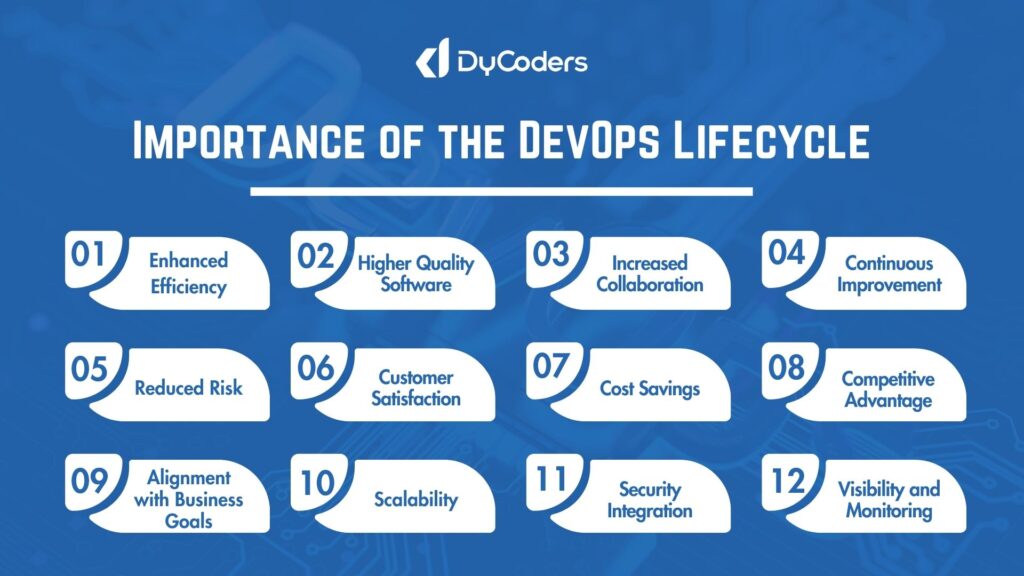
The DevOps life cycle matters significantly for several compelling reasons:
- Enhanced Efficiency: The DevOps lifecycle streamlines the software development process, reducing manual tasks, minimizing delays, and automating repetitive processes. This efficiency translates into faster development cycles, quicker time-to-market, and improved productivity.
- Higher Quality Software: DevOps emphasizes continuous testing and integration, which leads to the early detection and resolution of defects and issues. This results in higher-quality software with fewer bugs, reducing post-release maintenance and support efforts.
- Increased Collaboration: DevOps fosters collaboration between development and operations teams. This collaboration breaks down silos and encourages cross-functional teamwork, leading to better communication, shared responsibilities, and a stronger sense of ownership.
- Continuous Improvement: The DevOps culture promotes a continuous improvement mindset. Teams regularly assess their processes, gather feedback, and iterate on their workflows, ensuring that they are always striving for better outcomes.
- Reduced Risk: By automating and standardizing deployment and testing processes, DevOps reduces the risk of human errors and inconsistencies in software deployments. This enhances the reliability and stability of applications.
- Customer Satisfaction: The ability to deliver new features and updates quickly and reliably enhances customer satisfaction. DevOps enables organizations to respond rapidly to customer feedback and changing market demands.
- Cost Savings: Through automation, resource optimization, and reduced downtime, DevOps can lead to cost savings in both development and operations. It maximizes the utilization of infrastructure resources and minimises wastage.
- Competitive Advantage: Organisations that embrace DevOps can gain a competitive edge by being more agile and responsive to market changes. They can innovate faster and adapt to evolving customer needs and industry trends.
- Alignment with Business Goals: DevOps aligns IT operations with business objectives. It enables IT teams to prioritise and deliver features and improvements that directly contribute to business growth and customer value.
- Scalability: DevOps practices are scalable, making it possible to handle growing workloads and larger development teams without a proportional increase in operational complexity.
- Security Integration: DevOps includes the concept of DevSecOps, where security is integrated into the development and deployment process from the beginning. This results in more secure software and reduces the risk of security breaches.
- Visibility and Monitoring: DevOps emphasises continuous monitoring of applications and infrastructure, providing real-time insights into system performance. This proactive approach helps identify and address issues before they impact users.
Various Stages of the DevOps Lifecycle
The DevOps lifecycle consists of several distinct phases, each with its own set of goals and activities. These phases are designed to streamline the software development and delivery process, fostering collaboration and continuous improvement. Here are the different phases of the DevOps lifecycle:
- Planning: In this initial phase, teams define project objectives, plan resources, and set priorities. It involves gathering requirements, creating a roadmap, and establishing the overall strategy for the development project.
- Development: During the development phase, developers write code to create new features or make improvements to existing software. Continuous integration practices are applied to ensure that code changes are regularly integrated into a shared repository.
- Testing: Testing is a crucial phase where the software is rigorously examined for defects and issues. This includes unit testing, integration testing, and regression testing to ensure that the code functions correctly and meets quality standards.
- Integration: Integration involves merging code changes from multiple developers into a common codebase. Continuous integration tools and practices are employed to automate this process and identify integration issues early.
- Deployment: In this phase, the software is deployed to production or a staging environment for further testing and validation. Automation is used to ensure consistent and reliable deployments.
- Monitoring: Continuous monitoring is essential for tracking the performance and health of the deployed software. This phase involves collecting and analysing data on application performance, system health, and user behaviour.
- Feedback: Feedback loops are established to gather input from users, stakeholders, and automated monitoring systems. This feedback informs future development and improvement efforts, ensuring that software aligns with user needs and expectations.
- Security: Security is an integral part of each phase, with a focus on identifying and addressing vulnerabilities and threats. Security practices are integrated from the beginning to ensure the protection of data and systems.
- Compliance: Ensuring compliance with industry regulations and internal policies is critical, especially in highly regulated industries. DevOps practices include compliance checks and auditing to meet these requirements.
- Continuous Improvement: DevOps encourages a culture of continuous improvement. Teams regularly assess their processes, tools, and performance to identify areas for enhancement and optimization.
- Release and Deployment Automation: Automation tools and scripts are utilized to facilitate the release and deployment processes, making them repeatable, efficient, and less error-prone.
- Containerization and Orchestration: Container technologies like Docker and container orchestration platforms like Kubernetes are often integrated to enhance application scalability, portability, and management.
7 Cs Framework In DevOps Life cycle:
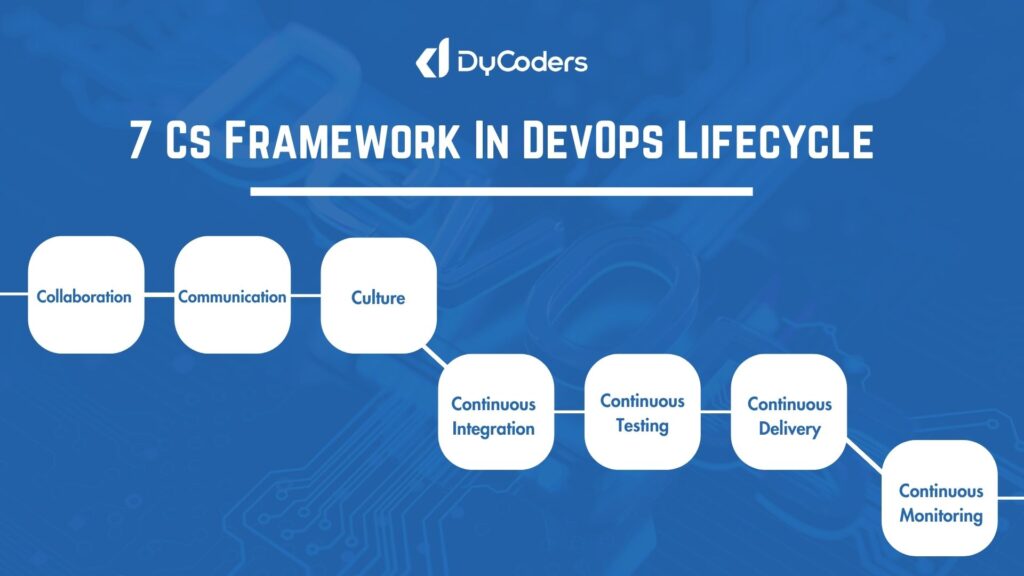
The 7 Cs – Collaboration, Communication, Culture, Continuous Integration, Continuous Delivery, Continuous Testing, and Continuous Monitoring – serve as the foundational pillars of the DevOps lifecycle. In this blog post, we’ll embark on a journey to explore how these Cs can elevate your DevOps practices and lead to transformative outcomes.
- Collaboration: At the heart of DevOps is collaboration, breaking down silos between development and operations teams. Collaboration fosters a sense of shared ownership and responsibility, where teams work cohesively toward common goals. Tools like version control systems and collaboration platforms facilitate teamwork, enabling developers and operators to jointly build and maintain robust systems.
- Communication: Effective communication is the linchpin of DevOps success. Clear and timely communication ensures that all team members are aligned with project goals and changes. Tools like chat platforms, video conferencing, and documentation systems enable real-time communication and knowledge sharing, reducing misunderstandings and errors.
- Culture: A DevOps culture emphasises values such as transparency, trust, and accountability. It encourages innovation and risk-taking while valuing collaboration over individual contributions. A DevOps culture motivates teams to embrace change, learn from failures, and continuously improve processes.
- Continuous Integration: Continuous Integration (CI) is the practice of automatically merging code changes into a shared repository and running automated tests to validate those changes. CI ensures that code is continuously integrated, reducing integration issues and enabling faster development cycles.
- Continuous Delivery: Continuous Delivery (CD) builds upon CI by automating the deployment process. With CD, code changes that pass tests are automatically deployed to staging or production environments. CD ensures that software is always in a deployable state, enabling rapid and reliable releases.
- Continuous Testing: Continuous Testing is integral to maintaining software quality throughout the DevOps lifecycle. Automated testing frameworks ensure that code changes are thoroughly tested for functionality, performance, and security at every stage. This reduces the risk of defects and enhances software reliability.
- Continuous Monitoring: Continuous Monitoring involves tracking the performance, health, and user behaviour of applications and infrastructure in real-time. Monitoring tools provide valuable insights, enabling teams to identify and address issues promptly, optimise resources, and make data-driven decisions.
Conclusion:
The DevOps lifecycle is a dynamic and iterative process that optimizes software development and delivery. By breaking down the software delivery journey into sequential phases and emphasizing collaboration, automation, and continuous improvement, DevOps has revolutionised the IT industry. Organizations that embrace the DevOps lifecycle gain a competitive edge by delivering high-quality software faster, fostering innovation, and meeting evolving customer demands. As DevOps continues to evolve, understanding and implementing its sequential phases remain essential for success in today’s technology-driven world.
BACK


 USA
USA
 CANADA
 AUSTRALIA
 PAKISTAN